Tuesday, September 6, 2022

RESEARCH PROJECT: Parasite Community Assembly and Disassembly

Students interested in conducting undergraduate and graduate thesis research for Spring-Fall semesters 2023 feel free to contact me at: santiagoalarcon@usf.edu

The project aims to understand the succession and assembly process of avian malaria communities using long term research at the USF Forest Preserve, and across an urbanization gradient in the Tampa area. 

For more information on the forest preserve visit: https://www.usf.edu/arts-sciences/departments/ib/research/forest-preserve.aspx

The main vertebrate group to study is birds and the parasites are the group of malarias and related haemosporidians (vector-borne blood parasites).

Students interested in conducting graduate work (M.Sc. and Ph.D.) please visit our graduate program web page at https://www.usf.edu/arts-sciences/departments/ib/graduate/index.aspx, so you can get all the information and see financial options (e.g., TAs, Fellowships).


GLOBAL WILDLIFE SUSCEPTIBILITY TO DISEASE


Robles-Fernández A, Santiago-Alarcon D, Lira-Noriega A. 2022. Wildlife susceptibility to infectious diseases at global scales. PNAS USA 119:e2122851119. https://doi.org/10.1073/pnas.2122851119

General Audience Media Links


Saturday, July 2, 2022

LANDSCAPE FUTURE PREDICTION OF AVIAN MALARIA PREVALENCE IN MEXICO

Ortega-Guzmán L, Rojas-Soto O, Santiago-Alarcon D, Huber-Sannwald E, Chapa-Vargas L. 2022. Climate predictors and climate change projections for avian haemosporidian prevalence in Mexico. Parasitology 1-16, https://doi.org/10.1017/S0031182022000683

Long-term, inter-annual and seasonal variation in temperature and precipitation influence the distribution and prevalence of intraerythrocytic haemosporidian parasites. We characterized the climatic niche behind the prevalence of the three main haemosporidian genera (Haemoproteus, Plasmodium and Leucocytozoon) in central-eastern Mexico, to understand their main climate drivers. Then, we projected the influence of climate change over prevalence distribution in the region. Using the MaxEnt modelling algorithm, we assessed the relative contribution of bioclimatic predictor variables to identify those most influential to haemosporidian prevalence in different avian communities within the region. Two contrasting climate change scenarios for 2070 were used to create distribution models to explain spatial turnover in prevalence caused by climate change. We assigned our study sites into polygonal operational climatic units (OCUs) and used the general haemosporidian prevalence for each OCU to indirectly measure environmental suitability for these parasites. A high statistical association between global prevalence and the bioclimatic variables ‘mean diurnal temperature range’ and ‘annual temperature range’ was found. Climate change projections for 2070 showed a significant modification of the current distribution of suitable climate areas for haemosporidians in the study region.


Thursday, February 4, 2021

How Quantum Mechanics Can Explain Evolutionary Adaptations and Novelty?

Quantum biology seeks to explain biological phenomena via quantum

mechanisms, such as enzyme reaction rates via tunnelling and photosynthesis

energy efficiency via coherent superposition of states. However, less

effort has been devoted to study the role of quantum mechanisms in biological

evolution. In this paper, we used transcription factor networks with two

and four different phenotypes, and used classical random walks (CRW) and

quantum walks (QW) to compare network search behaviour and efficiency

at finding novel phenotypes between CRW and QW. In the network with

two phenotypes, at temporal scales comparable to decoherence time TD,

QW are as efficient as CRW at finding new phenotypes. In the case of the

network with four phenotypes, the QW had a higher probability of mutating

to a novel phenotype than the CRW, regardless of the number of mutational

steps (i.e. 1, 2 or 3) away from the new phenotype. Before quantum decoherence,

the QW probabilities become higher turning the QW effectively more

efficient than CRW at finding novel phenotypes under different starting conditions.

Thus, our results warrant further exploration of the QW under more

realistic network scenarios (i.e. larger genotype networks) in both closed and

open systems (e.g. by considering Lindblad terms).


J. R. Soc. Interface 17: 20200567. http://dx.doi.org/10.1098/rsif.2020.0567

Wednesday, October 21, 2020

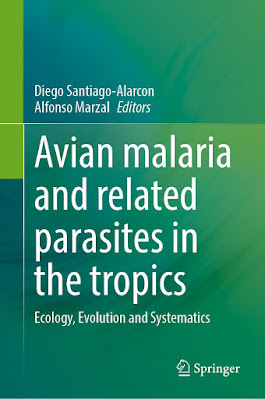
NEW BOOK! Avian Malaria and Related Parasites in the Tropics: Ecology, Evolution and Systematics

The Tropics are home to the greatest biodiversity in the world, but tropical species are at risk due to anthropogenic activities, mainly land use change, habitat loss, invasive species, and pathogens. Over the past 20 years, the avian malaria and related parasites (Order: Haemosporida) systems have received increased attention in the tropical regions from a diverse array of research perspectives. However, to date no attempts have been made to synthesize the available information and to propose new lines of research. This book provides such a synthesis by not only focusing on the antagonistic interactions, but also by providing conceptual chapters on topics going from avian haemosporidians life cycles and study techniques, to chapters addressing current concepts on ecology and evolution. For example, a chapter synthesizing basic biogeography and ecological niche model concepts is presented, followed by one on the island biogeography of avian haemosporidians. Accordingly, researchers and professionals interested in these antagonistic interaction systems will find both an overview of the field with special emphasis on the tropics, and access to the necessary conceptual framework for various topics in ecology, evolution and systematics. Given its conceptual perspective, the book will appeal not only to readers interested in avian haemosporidians, but also to those more generally interested in the ecology, evolution and systematics of host-parasite interactions.
 You can buy it at: https://www.springer.com/gp/book/9783030516321

Saturday, June 13, 2020

Parasite Richness Decreases With Urbanization

Effects of land use change (rural-urban) on the diversity and epizootiological
parameters of avian Haemosporida in a widespread neotropical bird

Transformation of natural environments for livestock, agriculture and human settlements modifies the diversity of organisms, usually decreasing in highly disturbed land uses. Like their hosts, parasites have to adapt to novel human impacted landscapes, in which the abiotic and biotic conditions are radically different from those of conserved natural environments. We evaluated the diversity (alpha and beta taxonomic and phylogenetic diversity) of haemosporidians (mtDNA cyt b lineages) in the common chlorospingus (Chlorospingus flavopectus) at five land use types. We further analyzed the response of prevalence, parasitaemia and parasite aggregation to and use types and seasonality. Parasite lineage richness (i.e., haplotypes) and abundance (no. infected hosts) decreased with disturbance. Parasite assemblages were commonly dominated by either one of two lineages, one dominant in the urban greenspace (pBAEBIC02) and the other dominant in well-preserved mountain cloud forest (hCHLFLA01). Beta diversity was mainly explained by lineage turnover. Phylo beta diversity was low (i.e., lineages are closely related). Overall prevalence increased in wet season that coincides with host's breeding season. Haemoproteus and Plasmodium prevalence presented the opposite response to urbanization (negative and positive, respectively). Parasitaemia presented similar values across land uses for both genera and seasons, while Plasmodium aggregation decreased with urbanization. Thus, some parasite lineages (pBAEBIC02) will benefit from the urbanization process, while others will entirely disappear from cities (hCHLFLA01).

Hernández-Lara C, Carbó-Ramírez P, Santiago-Alarcon D. 2020. Effects of land use change (rural-urban) on the diversity and epizootiological parameters of avian Haemosporida in a widespread neotropical bird. Acta Tropica209: 105542 https://doi.org/10.1016/j.actatropica.2020.105542
To download for free until August 01, 2020: https://authors.elsevier.com/a/1bDd4,2Uvj2LY


Thursday, April 2, 2020

House Sparrows Are City Gangsters!

Biological invasions are the second most important cause of species extinction. Aided by processes such as transportation and urbanization, exotic species can establish and spread to new locations, causing changes in the function and structure of ecosystems. The House Sparrow is a widespread and highly abundant landbird associated to human presence. Previous studies performed in urban landscapes have suggested that this species could be acting, in synergy with urbanization, as a potential threat to native urban avian assemblages. In this study we assessed the relationship between House Sparrow density and native bird species richness in a region where the sparrows are scarce and sparsely distributed. We surveyed bird assemblages in and around four small-sized human settlements, considering three conditions in relation to House Sparrow presence: urban invaded,
urban non-invaded, and non-urban non-invaded. To assess the potential detrimental role of House Sparrows on native bird species richness, we measured, additionally to sparrow densities, 20 predictor variables that describe vegetation structure and complexity, as well as urban infrastructure and human activities across four seasons of 1 year. Our results show that maximum shrub height was positively related to bird species richness, built cover was negatively associated with it, and House Sparrow invaded sites were related to a significant decrease of bird species richness, with increasing richness loss when more sparrows were present. Thus, we here provide evidence that urban areas can act in synergy with the presence of House Sparrows (even in low densities) in the urban-related species richness decline pattern.
García-Arroyo M, Santiago-Alarcon D, Quesada J, MacGregor-Fors I. 2020. Are invasive House Sparrows a nuisance for native avifauna when scarce? Urban Ecosystems https://doi.org/10.1007/s11252-020-00963-x.

City Is Less Risky For House Sparrows Infection

Urbanization affects the ecology of wildlife diseases and although it has been suggested that there are lower risks of infection in urban areas, there have been no experiments to support this conclusion. We assessed haemosporidian prevalence and intensity in House Sparrows Passer domesticus using field and experimental data under contrasting conditions (i.e. urban vs. non-urban). For experimental data, we kept 32 male House Sparrows in captivity as a proxy of stress, and for field data we sampled 49 House Sparrows (17 females). We made use of microscopy to determine the relative intensity and used the polymerase chain reaction to estimate infection prevalence. We obtained total leucocyte counts, leucocyte differentials, heterophil/lymphocyte ratio (H/L) as a measure of stress, and the Polychromatic Index as a measure of physiological condition (erythropoiesis). We identified a total of 10 haemosporidian lineages. For field samples (both males and females), we found a significantly higher prevalence of infection in non-urban House Sparrows than in urban ones. Under experimental conditions, non-urban House Sparrows showed a higher prevalence than urban ones both before and after captivity, with a significant increase in parasite intensity. The number of infected birds increased after captivity for both urban (~ 32%) and non-urban House Sparrows (~ 19%), indicating either a recrudescence of chronic and relapses of latent infections or the appearance of infections that had been acquired earlier. The H/L ratio was significantly higher for non-urban than for urban male House Sparrows before captivity. No difference in H/L was found for urban House Sparrows before and after captivity, indicating tolerance to city stressors. Our results showed a significant decrease in H/L for non-urban birds after captivity, suggesting higher stress in the non-urban agricultural environment. Haemosporidian infections were not associated with the H/L ratio. Our study provides evidence that highly urbanized areas within cities represent lower haemosporidian infection risks than do non-urban areas for House Sparrows.
Santiago-Alarcon D, Carbó-Ramírez P, MacGregor-Fors I., Chávez-Zichinelli C.A., Yeh P.J. 2020. Avian malaria prevalence of an invasive urban bird is lower in urban than non-urban environments. Ibis162: 201-214. doi:10.1111/ibi.12699

The City Choir Is Out of Tune!

Living in the city represents a great challenge for organisms that are exposed to the novel environmental conditions inherent to urbanization. Recent studies have highlighted the ecological impact that urbanization poses on the acoustic phenotype and singing routines of birds. However, the organization and structure of avian dawn choruses in urban settings remains largely unexplored. In this study, we assessed the temporal structure of avian dawn choruses in an intra-urban area and a peri-urban forest using bipartite network analyses. We predicted a random network structuring of dawn choruses across time at the intra-urban area, while expected a non-random structure (i.e., modular or nested) at the peri-urban forest. While we detected different groups of birds vocalizing
together temporarily, following a modular pattern in both studied conditions, only the one from the peri-urban forest showed a sequential temporal structure of dawn choruses. Avian dawn choruses from both intra-urban and peri-urban areas were mainly comprised by phylogenetically unrelated species (i.e., random phylogenetic structure), also exhibiting low overlap on singing frequencies. Our results are in agreement with the temporal partitioning of the acoustic space in the peri-urban forest. Our findings also suggest that the absence of temporally-structured modules of bird dawn choruses at heavily-urbanized areas could be related to the depauperization of the avian community at intra-urban areas as a sequel of ecological filtering, as well as the consequent importance of the dominance of the acoustic space by invasive species.
Marín-Gómez OH, Dáttilo W, Sosa-López JR, Santiago-Alarcon D, MacGregor-Fors I. 2020. Where has the city choir gone? Loss of the temporal structure of bird dawn choruses in urban areas. Landscape and Urban Planing 194:103665

Wednesday, August 14, 2019

How do Diptera vectors respond to habitat structure and haemosporidian infection risk?

The presence of insect vectors is a key prerequisite for transmission of vector-borne disease such as avian haemosporidians. In general, the effects of land use change on Diptera vectors are not well studied; the response of vectors to forest management depends on vector species, as has been shown previously for the birds. We tested if abundance of insects from different Diptera families and haemosporidian infection are affected through alteration of habitat structural variables (measured by LiDAR) and forest management intensities. We identified higher large-scale variation of female insect abundance in northeastern than in southwestern Germany. Unmanaged forest stands had higher Diptera insect abundances. We found that abundance of female Diptera increased with the amount of forest gaps but decreased in forest plots with more south facing aspect, higher habitat structural heterogeneity, temperature and humidity. We found that haemosporidian infections in Diptera insects increased with increased management intensity and more canopy structural diversity (e.g., amount of edge habitat), but decreased with a denser shrub layer, deeper leaf litter and higher humidity (characteristics for unmanaged forest stands). Although higher forest management intensity decreased vector abundance, the haemosporidian infections in the vectors increased, indicating a significant effect of forest management on disease dynamics.

van Hoesel W, Marzal A, Magallanes S, Santiago-Alarcon D, Ibáñez-Bernal S, Renner SC. 2019. Management of ecosystems alters vector dynamics and haemosporidian infections. Scientific Reports9:8779. https://doi.org/10.1038/s41598-019-45068-4 

Wednesday, April 24, 2019

Avian Biogeography Across Neotropical Seasonal Dry Forests

Neotropical seasonally dry forests (NSDF) are widely distributed across Latin America and the Caribbean. They possess important levels of species richness and endemism but few studies have assessed the diversity patterns and ecological relationships between the entire avifauna of these threatened forests. Thus, in order to analyse the macro-ecological patterns and the community structure of NSDF avifaunas, we generated species distribution models describing the current geographical distribution of 1,298 bird species inhabiting NSDF. We assessed species richness gradients in terms of distance from the Equator using both linear and polynomial regressions. Then, based on a matrix composed of the presence or absence of species in 563 quadrants, we performed cluster analyses to identify the main NSDF regions and describe the avifaunal affinities among them. For the identified groups, we estimated the dissimilarity values, using both an ANOSIM test and the βSIM index. Overall, we observed the lack of an equatorial peak for species diversity of NSDF avifauna in the latitudinal gradient and identified 12 avifaunistic groups. The βSIM index among the NSDF avifaunal groups ranged from 0.05-0.73, showing statistically significant differences (R = 0.894, p = 0.001) in species composition among them. Species shared between two or three NSDF groups comprised a higher proportion (~38%) than those exclusive to each group (~23%). Only 35 species were shared between the 12 groups. This information supports a separation of the NSDF avifauna into two major groups (northern and southern), as well as the idea of connections during recent geological time among the NSDF in southeastern South America (the so-called Pleistocene Arc Hypothesis). We provide a scientific framework to contextualise the importance of each NSDF nuclei in terms of their avifauna, supplying an ecological basis for future conservation decisions in order to protect their diversity.
Prieto-Torres, D.A., Rojas-Soto, O.R., Santiago-Alarcon, D., Bonaccorso, E. & Navarro-Sigüenza, A.G. (2019). Diversity, endemism, species turnover and relationships among avifauna of neotropical seasonally dry forests. Ardeola, 66: 257-277.


Sunday, March 17, 2019

Spatiotemporal Bird-Haemosporidian Analysis of an Urban Bird Assemblage

Prevalence responses to anthropic factors differ across hosts and parasite species. We here analyzed the spatiotemporal variation of avian haemosporidian prevalence in bird assemblages of the Mooswald forest (i.e., urban greenspace; Freiburg, Germany), in response to local environmental features (e.g., water sources, human presence (visited)/absence (unvisited)) and bird-level traits (e.g., body condition, age, sex) in 2 years. We analyzed a total of 544 samples of seven bird species. Haemosporidian prevalence was significantly different between some focal bird species. There was a negative association between distance to the nearest water source and prevalence in the year 2011, and the opposite pattern for the year 2013. However, when analyzed for the six focal species separately, such a relationship could change from a negative to a positive one, or there could be no relationship at all. For Leucocytozoon there was higher prevalence in the section of the forest visited by humans. We did not find spatial autocorrelation for prevalence across the study site, but there were statistically significant local spatial clusters in the visited section. Although there were similar responses of prevalence to some factors, infection patterns were generally bird species specific. Thus, prevalence is a labile epidemiological parameter, varying spatiotemporally in an idiosyncratic way.
International Journal for Parasitology 49 (2019) 235–246. You can download the paper from the following link during the next 50 days: https://authors.elsevier.com/a/1YkCD4j~kk0TK

Wednesday, March 13, 2019

First Morphological Phylogeny of Avian Haemosporidians (Editor´s Choice)

The traditional classification of avian Haemosporida is based mainly on morphology and life history traits. Recently, molecular hypotheses have challenged the traditional classification, leading to contradictory opinions on whether morphology is phylogenetically informative. However, the morphology has never been used to reconstruct the relationships within the group. We inferred the phylogeny of avian Haemosporida from 133 morphological characters present in blood stages. We included all species with at least one mitochondrial gene characterized (n = 93). In order to recover the evolutionary history and identify phylogenetically and taxonomically informative characters, they were mapped on the total evidence phylogeny. We identified a unique combination of morphological traits, clearly differentiating avian Haemosporida genera, sub-genera of Leucocytozoon and Haemoproteus, and some Plasmodium sub-genera. Plasmodium had the highest number of synapomorphies. Furthermore, 86% of the species presented a unique combination of taxonomically informative characters. The combination of morphology and mtDNA proved to be a robust alternative to reconstruct the relationships among avian Haemosporida, obtaining a resolution and support similar to that obtained using full mitochondrial genome sequences for over 100 lineages.
Citation: Hernández-Lara C, Espinosa de los Monteros A, Ibarra-Cerdeña CN, García-Feria L, Santiago-Alarcon D. 2018. Combining morphological and molecular data to reconstruct the phylogeny of avian Haemosporida. International Journal for Parasitology 48: 1137-1148

Monday, December 10, 2018

BIRD RICHNESS AND COMPOSITION AT DIFFERENT LAND USE TYPES


Studying the anthropogenic components of landscapes can provide a solid groundwork to better understand ecological patterns and processes. In this study, we assessed bird species richness and composition in 5 different environmental conditions (well-preserved cloud forest, peri-urban forest, urban greenspace, shade coffee plantation, and cattle ranch) embedded in a landscape whose original vegetation was tropical montane cloud forest. Our results showed that the most similar vegetation structure and physiognomy were peri-urban forest and shade coffee plantation, with urban
greenspaces comprising a highly different condition. Regarding species richness, we found no differences for the nonbreeding season (average values 32.9–41.8), but we did find statistical differences for the breeding season (average values 24.5–43.7); highest species richness was recorded for well-preserved cloud forest (43.7 calculated species), which was significantly different from shade coffee plantation (lowest species richness value 24.5) and urban greenspaces (29 calculated species). These results support the idea that during the nonbreeding season, when habitat requirements are less strict, species distribute homogeneously across the landscape, whereas species tend to be more selective and concentrated in original forests during the breeding season. Community composition during the breeding season showed a .40% similarity cluster composed of well-preserved cloud forest, shade coffee plantation, and cattle ranch. In the nonbreeding season, however, 2 clusters were formed at ~30% similarity: (1) urban greenspaces and cattle ranch; and (2) peri-urban forest, shade coffee plantation, and well-preserved cloud forest. Our results highlight the overall negative effect of urbanization on breeding bird species richness and composition, as well as the importance of having large patches of well-preserved cloud forests in sheltering high bird diversity.
The Wilson Journal of Ornithology 130(1):81–93, 2018
URL: http://www.bioone.org/doi/full/10.1676/16-087.1


Thursday, March 1, 2018

Mosquito Blood Feeding


We analyzed mosquito blood meals at places with different land use types, finding generalist feeding patterns by several mosquito species. Moreover, we found that mosquitoes infected with avian haemosporidian DNA were readily feeding on humans across different sites in the local landscape. This study provides further support towards current findings suggesting that Diptera vectors are actually not that specialized on host groups, but rather can have plastic preferences

Wednesday, June 29, 2016


A total of 2536 adult mosquitoes were collected, belonging to 9 genera and 10 species; the dominant species in the study were: Aedes quadrivittatus, Wyeomyia adelpha, Wy. arthrostigma, and Culex restuans. Highest richness was recorded in the dry season, whereas higher abundance was detected during the rainy season. The urban forest had the highest species richness (n = 7) when compared to all other sites. Species composition cluster analyses show that there is a high degree of similarity in species numbers across sites and seasons throughout the year. However, when considering the abundance of such species, the well-preserved montane cloud forest showed significantly higher abundance. Moreover, the urban forest is only 30 % similar to other sites in terms of species abundances, indicating a possible isolating role of the urban environment. Mosquito assemblage was differentially influenced by land-use change and seasonality, but at the same time the assemblage is rather homogeneous across the studied landscape, suggesting a high degree of spatial connectivity. Information generated in this study is potentially useful in the development of urban planning and surveillance programs focused mainly on mosquito species of medical and veterinary importance.DOI 10.1186/s13071-015-1086-9


All haemosporidian infections in chestnut-capped brush finches belonged to Haemoproteus and Plasmodium species. Prevalence and parasitaemia of avian malaria were higher during the rainy season, while aggrega-tion remained similar. Both prevalence and parasitaemia were higher in the urban forest. Prevalence was lower in the well-preserved cloud forest during the dry season. Parasitaemia was negatively associated to bush cover. Our results suggest that an increase in land use intensity reduces seasonal fluctuations in parasite transmission, and that infections are more frequent and more severe for birds inhabiting urban environments. DOI:http://dx.doi.org/10.1016/j.landurbplan.2016.05.025 

Avian Malaria Responses to Different Forestry Practices and Habitat Structure


We used, to our knowledge for the first time, continuous forest structural parameters to quantify habitat structure, and found significant effects of habitat structure on parasite prevalence that previously have been undetected. We found three times higher prevalence for blackcaps compared with chaffinches. Parasite intensity varied significantly within host species depending on forest type, being lowest in beech forests for both host species. Structurally complex habitats with a high degree of entropy had a positive effect on the likelihood of acquiring an infection, but the effect on prevalence was negative for forest sections with a south facing aspect. For blackcaps, forest gaps also had a positive effect on prevalence, but canopy height had a negative one. Our results suggest that forest types and variations in forest structure influence the likelihood of acquiring an infection, which subsequently has an influence on host health status and body condition; however, responses to some environmental factors are host-specific. DOI: http://dx.doi.org/10.1016/j.ijpara.2016.04.008


Eyeless Rays in the Gulf of Mexico: a new species?


Additionally to the eyeless characteristic, both regular (presence of eye) and eyeless (absence of eye) morphotypes have contrasting quantitative values and qualitative features for different phenotypic traits (color, teeth number, pelvic fin and spiracle form). Mature female and male eyeless morphotype had functional internal reproductive structures. Using the bar code gene, we found conclusive evidence that the eyeless morphotype belongs to the species D. americana. This is the first report on reproductively functional eyeless individuals of this species or close relatives elsewhere, which live sympatrically with regular D. americana individuals in the southern Gulf of Mexico. 

 DOI: 10.3856/vol44-issue3-fulltext-x 

Monday, March 14, 2016

Respuesta del Bosque Seco al Cambio Climático y el Papel de las Áreas Protegidas


En este artículo estudiamos la respuesta de los bosques secos al cambio climático utilizando un método de nicho ecológico a nivel de comunidades. Demostramos que el bosque seco cambiará su distribución hacia zonas más altas. Proponemos el concepto de Áreas Dinámicas Protegidas para ayudar y extender las capacidades actuales del sistema de áreas protegidas de México.